From Local Meets to the Olympics: USA Swimming Championships and Time Standards Explained
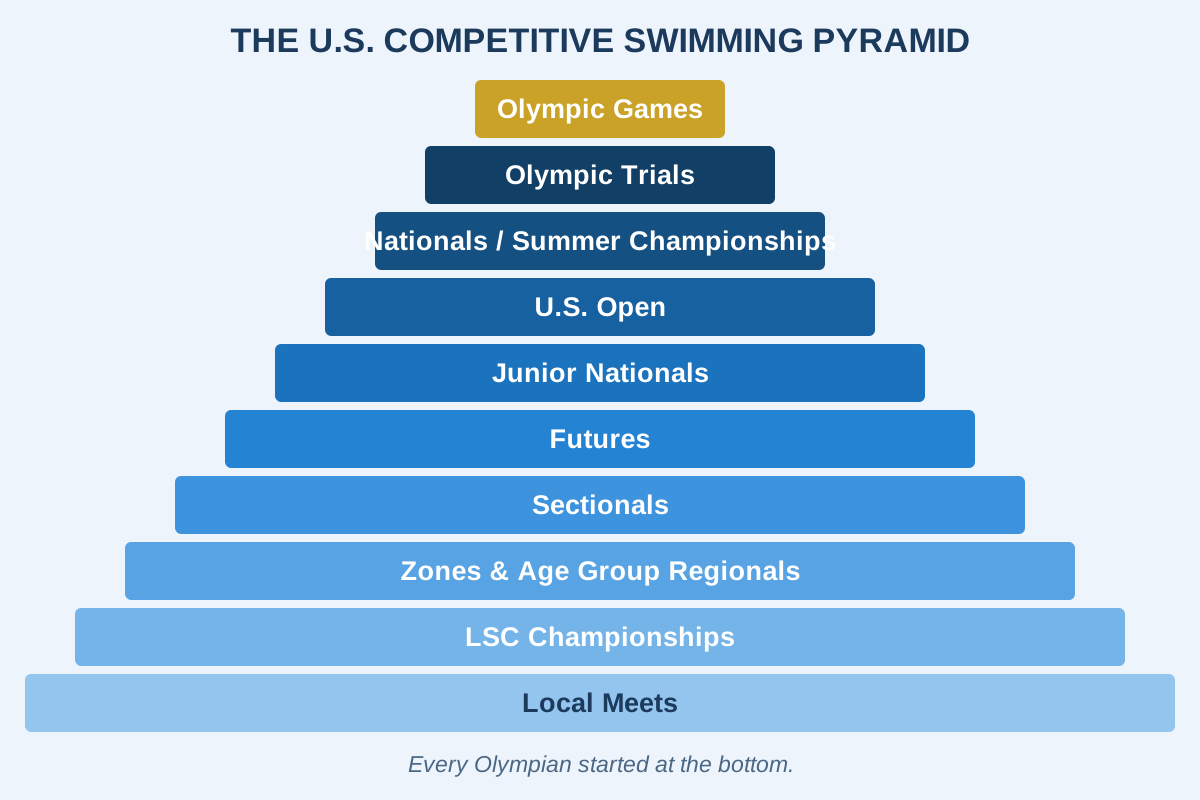
Competitive swimming in the U.S. is organized as a pyramid. Each level represents a higher standard of competition — and a smaller group of athletes. Every Olympian started at the bottom of this pyramid: success is not about skipping steps, it is about mastering each one with patience, consistency, and hard work. This guide explains the levels, the championship meets you will hear about, and the “cuts” you need to get into each of them.
First, the letters: what B, BB, A, AA, AAA, AAAA mean
USA Swimming publishes motivational time standards for every event, age group, and course. They form a ladder of six levels, from slowest to fastest: B → BB → A → AA → AAA → AAAA. They exist to give every swimmer a next goal that is close enough to reach: drop time, earn the next letter.
| Standard | What it roughly means |
|---|---|
| B / BB | Developing competitive swimmer — racing regularly and improving. |
| A / AA | Strong age-group swimmer — typically fast enough for LSC championship meets. |
| AAA / AAAA | Among the fastest in the country for the age group — the level where Zones, Sectionals, and national meets come into view. |
Three things to know about these standards. They are defined per event, per age group, and per course (short-course yards vs long-course meters), so a swimmer is not “an AA swimmer” overall — she might be AAA in the 100 back and BB in the 200 breast. They are refreshed by USA Swimming every four years. And they are motivational: they are goalposts, not meet entries by themselves — but many championship meets use them (or times close to them) as qualifying cuts. For a deeper dive, see our article on swimming time standards.
How cuts work
Almost every meet above the local level has qualifying times (“cuts”): to enter an event, you must have officially swum faster than the published standard during the qualification window. Each meet publishes its own cuts each season in the meet announcement, usually in both yards and meters. The higher up the pyramid, the faster the cuts and the fewer swimmers who hold them. Making a cut is a milestone in itself — swimmers talk about “getting a Sectional cut” or “chasing a Futures cut” the way others talk about medals.
The age-group path
| Meet | Who competes & what it takes |
|---|---|
| Local meets | Open or low-cut meets hosted by clubs. This is where you build experience, race often, improve, and post the official times that unlock everything above. |
| LSC Championships | Each Local Swimming Committee (LSC) runs its own championship meets — typically an Age Group Championship (often called Junior Olympics) and a Senior Championship. Cuts are set by the LSC, commonly around the A standard. |
| Age Group Regionals | In larger LSCs, a step above the LSC championship with faster qualifying standards and tougher fields. |
| Zones | USA Swimming divides the country into four zones (Eastern, Southern, Central, Western). At Age Group Zones, the best age-group swimmers from many LSCs race together, often as LSC all-star teams. Cuts are typically in the AAA range. |
Your own LSC may add meets of its own to this ladder. In Pacific Swimming, for example, the season builds through Zone Age Group Championships to the Far Western Championships — a prestigious invitational, open beyond the LSC, with cuts faster than Junior Olympics. Pacific also runs senior meets such as the Senior Open and Senior 2, which give older swimmers championship racing at two different qualifying levels. Check your LSC's website for its championship calendar and cut sheets.
The national path
From here on, meets are national in scope, run long-course or short-course depending on the season (spring/summer championship meets are generally long-course meters; the winter editions short-course yards), and every one has published cuts.
| Meet | Who competes & what it takes |
|---|---|
| Sectionals | The first major step into elite senior-level competition. Each zone hosts sectional championships (spring and summer) with cuts well beyond AAAA for most age groups. |
| 18&U Spring Cup | A national-level spring championship for swimmers 18 and under — a bridge between Sectionals and the junior national meets. |
| Futures | A summer national-level meet for swimmers on the rise — faster than Sectionals, not yet Junior Nationals. Held at several sites across the country. |
| Junior Nationals (Summer & Winter) | The nation's top 18-and-under swimmers. Summer Juniors is long-course; Winter Juniors (December) is short-course yards, split into East and West sites. |
| U.S. Open | A winter championship with no age restriction — America's best swimmers, including professionals and Olympians, plus international entries. |
| Nationals / Summer Championships | The top meet on the domestic calendar. Finishing high here is how swimmers earn spots on U.S. teams for international competition. |
| Olympic Trials | Held every four years with the fastest entry cuts in American swimming. Finish in the top two of your event (plus relay spots) to make Team USA. |
The international stage
The very top of the pyramid works differently: you cannot enter these meets with a cut. Swimmers are selected to represent the United States based on their results at Trials or Nationals.
| Meet | What it is |
|---|---|
| Pan Pacific Championships | “Pan Pacs” — the U.S. against Australia, Japan, Canada, and other Pacific-rim nations, held between Olympic years. |
| World Championships | The global championship of the sport, against every swimming nation. |
| Olympic Games | The ultimate stage. |
Reading the pyramid as a swimmer (or a parent)
The pyramid is not a checklist to rush through — it is a map. At any point in a season, a swimmer really only needs to know two things: which meet is next, and which cut is within reach. A 12-year-old chasing her first A time and a 17-year-old chasing a Junior National cut are doing exactly the same thing, one level apart. Race often at the level you are at, target the next standard in your best events, and let the levels take care of themselves.
ScoreMeUp shows how your times compare against USA Swimming standards on every swimmer profile — so you always know which letter you hold and how far the next cut is.
Happy swimming!
- Tags:
- Championships
- Time standards
Latest Posts

Setting Goals as a Swimmer: Why It Matters and How to Do It Right
September 7th 2026
The College Swimming League (CSL) Explained
September 5th 2026
Build Your Own Dryland Workout: An Exercise Menu for Swimmers
August 15th 2026
Essential Items to Pack in Your Swim Backpack for a Meet
October 2nd 2023
Swimming Time Standards: What You Need to Know
November 24th 2022
The Best Swim Gear for Optimal Performance
October 3rd 2022
The Importance of Dryland Training for Swimmers
September 28th 2022
Understand the heat sheets and what to write on the swimmer's arm for a meet
September 25th 2022