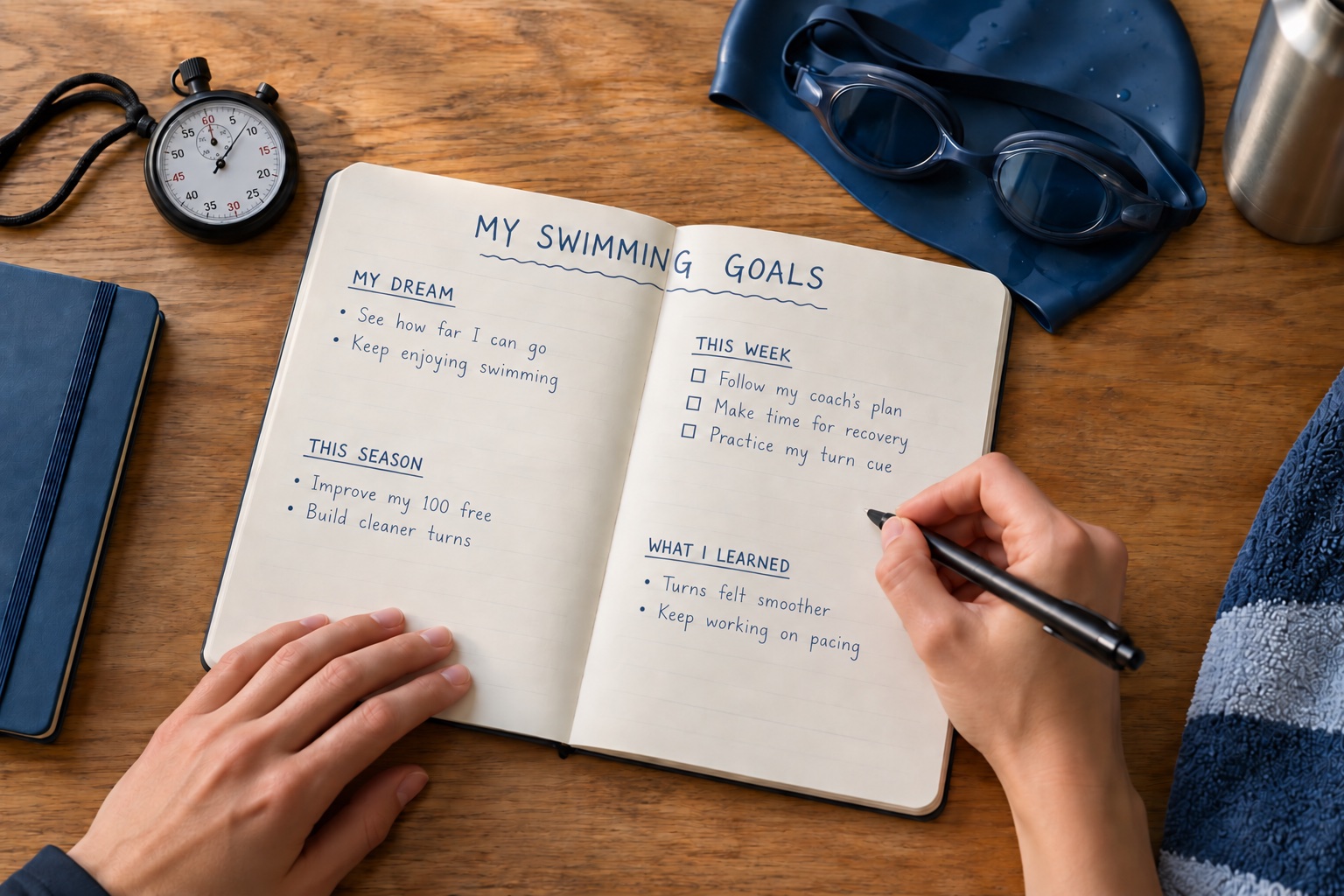
Setting Goals as a Swimmer: Why It Matters and How to Do It Right
Every season starts the same way: new group, new schedule, and somewhere in the first weeks, someone asks — "What are your goals this season?" It sounds simple, but how a swimmer answers it, and what they do with the answer, makes a real difference. Research on goal setting consistently finds that specific goals help people focus effort and track progress — and that goals work best when they belong to the person chasing them.
Why set goals at all?
Goals make progress intentional. Swimmers improve without written goals too — but a goal turns improvement from something that happens to you into something you direct. A goal does three things:
- Direction — with hundreds of practices in a season, a goal decides what all that water time is for.
- Motivation — on the days when the alarm rings early and the pool is cold, a swimmer who knows why they are there pushes through sets differently.
- A measure of progress — one that is about you: your times, your technique, your consistency.
Start with why, not with a time
Before writing any target time, answer one question in your own words: "Why does this goal matter to me?" Maybe it's making the championship relay, swimming a legal 200 fly for the first time, earning a cut, or simply loving racing and wanting to see how fast you can get. All of these are real goals — goal setting is not reserved for swimmers chasing elite meets.
This question also settles the roles: the swimmer chooses what matters. The coach helps shape a realistic plan around it. Parents provide the support — the rides, the meals, the quiet hour to think. A goal sheet written by mom or dad is mom or dad's goal sheet; when the answer to "why does this matter?" comes from the swimmer, the engagement follows.
Know what you control — and what you only influence
Wanting to win is legitimate — ambition is fuel. The key is knowing which kind of goal you're holding, because they behave differently:
| Type | Example | How much is yours? |
|---|---|---|
| Outcome goal | Win my heat; make finals at champs | Depends on you and others — you can't control who shows up |
| Performance goal | Take my 100 free from 1:04.20 to 1:03.00 | You influence it strongly, but race day has variables: taper, sleep, a growth spurt |
| Process goal | Streamline off every wall in practice; be in bed by 9:30 | Mostly yours, day after day |
Even process goals aren't controlled perfectly — illness, travel, and school exams happen. That's fine. The principle is a gradient: build your daily plan from the bottom row, let the middle row measure your progress, and let the top row inspire you without grading you. A systematic review of goal setting in sport found the largest performance effects for process goals — the behaviors you can act on today.
Step one: define the goal
Two levels work well:
- A big dream. Where would you love swimming to take you one day? It's allowed to be far away — it's the compass, not this season's destination.
- Two or three season goals. Precise and measurable: an event, your current best, the time you're going after. Time standards and championship meets make good reference points — your ScoreMeUp profile shows your current bests and the gap to each cut.
Step two: “a goal without a plan is just a wish”
As the saying goes. Once the goal is written, the real question becomes: what will I do, week after week, to earn it? That's the plan, built from process goals:
- How many swim practices will I attend? (Match your coach's expectations for your group.)
- What dryland does my coach's plan include? Strength work for young swimmers belongs on nonconsecutive days with recovery between sessions, per NSCA youth resistance-training guidance — light mobility or stretching is a different matter and can be more frequent.
- Which technique focus am I working on right now — one thing at a time, agreed with my coach?
- What are my sleep and recovery habits? Rest days are part of the plan, not a break from it.
Consistency is the whole game
“Discipline is the bridge between goals and accomplishment.” — Jim Rohn
Here's the trap, and it doesn't feel like a trap from the inside: you start the season motivated and train hard for a month. Then you ease off. Then something re-motivates you — a good meet, a teammate's swim — and you train hard again… until it fades again. In your mind you've been training all season; in reality it was stop and go, so you get a fraction of the results — and worse, you get discouraged: "I'm doing the work, why am I not dropping time?" Each restart costs more energy than continuing would have.
Two habits protect consistency:
- Schedule commitments in advance and give them a fixed place in your week. Whatever gets pushed to "later in the week" quietly becomes lower priority, and lower-priority things are the first to disappear. The right frequency and intensity come from your coach's plan — consistency means showing up for that plan, not stacking extra sessions.
- Count coming back as consistency. Getting sick, traveling, missing a week — that's life, not failure. Returning to the routine right away is the discipline. And resting when the plan says rest is consistency too.
A worked example
Maya swims the 100 free in 1:04.20 (SCY). With her coach, she sets a target of 1:03.00 at her March meet. (Example times — not official qualifying standards.)
- Why it matters to her: she wants a spot in the championship medley relay, and freestyle is her leg.
- Technique focus (agreed with coach): she fades on the third 25, so they work on pacing the first 50 and holding her breathing pattern.
- Weekly routine: her group's practices, the dryland her coach schedules, lights out by 9:30 on school nights.
- Review: five minutes on Sunday — did I keep my commitments? — and a quick chat with her coach after each meet.
In January she races and goes 1:04.80 — slower than her best. Frustrating night. But the check-in questions turn it into information: she went out in 29.1 (too fast against the plan) and died coming home. The plan isn't broken — the execution drifted. Adjustment: more pace work at race speed, and a target first-50 split written on her hand at the next meet. In March she swims 1:03.4. Missed the target — and dropped eight tenths, with a race executed the way she planned it. That's a season working.
Your plan will change — that's the point
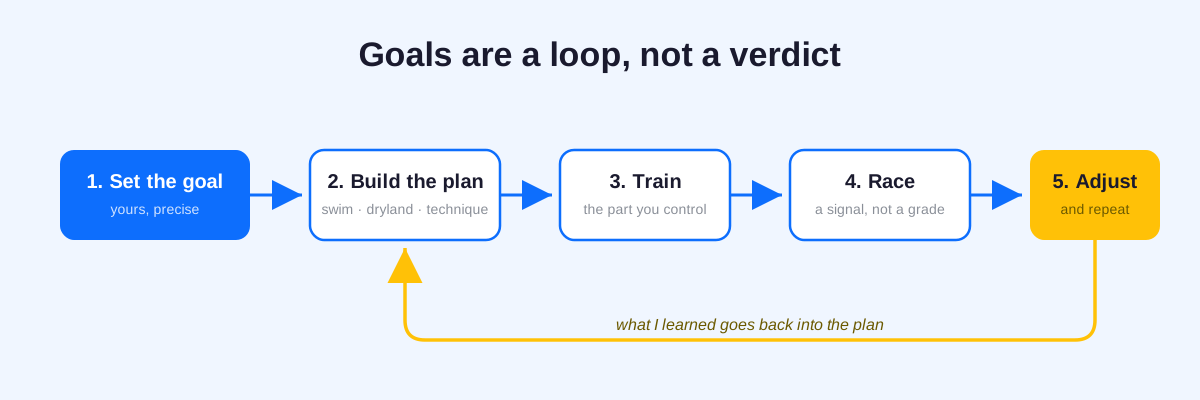
Whatever plan you write in September won't survive unchanged to March — and that's a sign of learning, not failure. You'll discover the technique focus that clicked, the schedule that didn't fit, the event you unexpectedly love. A good goal sheet is a living document: keep what works, change what doesn't.
A meet result is a signal, not a sanction. Fast or slow, it is feedback telling you whether the plan is working or needs an adjustment.
After each meet, ask three questions: What went well? What did I learn? What will I adjust? Then update the plan and move on — Maya's January race is exactly this loop in action. Swimmers who treat races this way keep improving; swimmers who treat them as verdicts learn to fear the blocks.
What if I miss my goal?
You might — goals worth chasing carry that risk, and missing one can genuinely hurt. It's okay for it to hurt; it means you cared. And reaching one can matter for a long time — a breakthrough swim can carry confidence for seasons. But neither result defines your worth, and neither is the whole story of a season. Progress also shows up in places the scoreboard doesn't display: cleaner technique, a better-executed race, more confidence behind the blocks, still loving the sport in March.
So instead of ending the season with a pass-or-fail question, end it with reflection: What did I learn? Where did I grow? What do I carry into next season? A swimmer who committed to a plan, adjusted along the way, and fell short of the time still built something durable — the habits, and usually the drop comes with them.
One more thing: sharing your goals is optional. Some swimmers gain energy from saying them out loud; others prefer to keep them private and let the swimming speak. Both work — choose what makes you train better.
Make it yours
The exercise belongs to the swimmer — written in your own words, at your own pace. There's no deadline; a goal sheet rushed in ten minutes to make someone happy is worth what it took to write. Your coach may have their own template and process — use theirs if so. And build in the rhythm: a five-minute check-in each week (did I keep my commitments?) and a review with your coach every few weeks or after each meet.
Download the goal sheet
A simple two-page template: your dream, your season goals, your weekly plan, and a check-in page that treats every meet as feedback. Print it, write on it, pin it somewhere you'll see it. Notebook, whiteboard, or your coach's format work just as well — the format doesn't matter; writing it yourself does.
Download the goal sheet (PDF)The loop, one more time
- Set the goal — yours, precise, starting from why it matters to you.
- Build the plan — weekly commitments shaped with your coach: water, dryland, technique, sleep, recovery.
- Train — consistently, week after week, not in bursts.
- Race — collect the signal, without fear.
- Adjust — feed what you learned back into the plan, and go again.
Set it, chase it, adjust it — and enjoy the chase.
Latest Posts
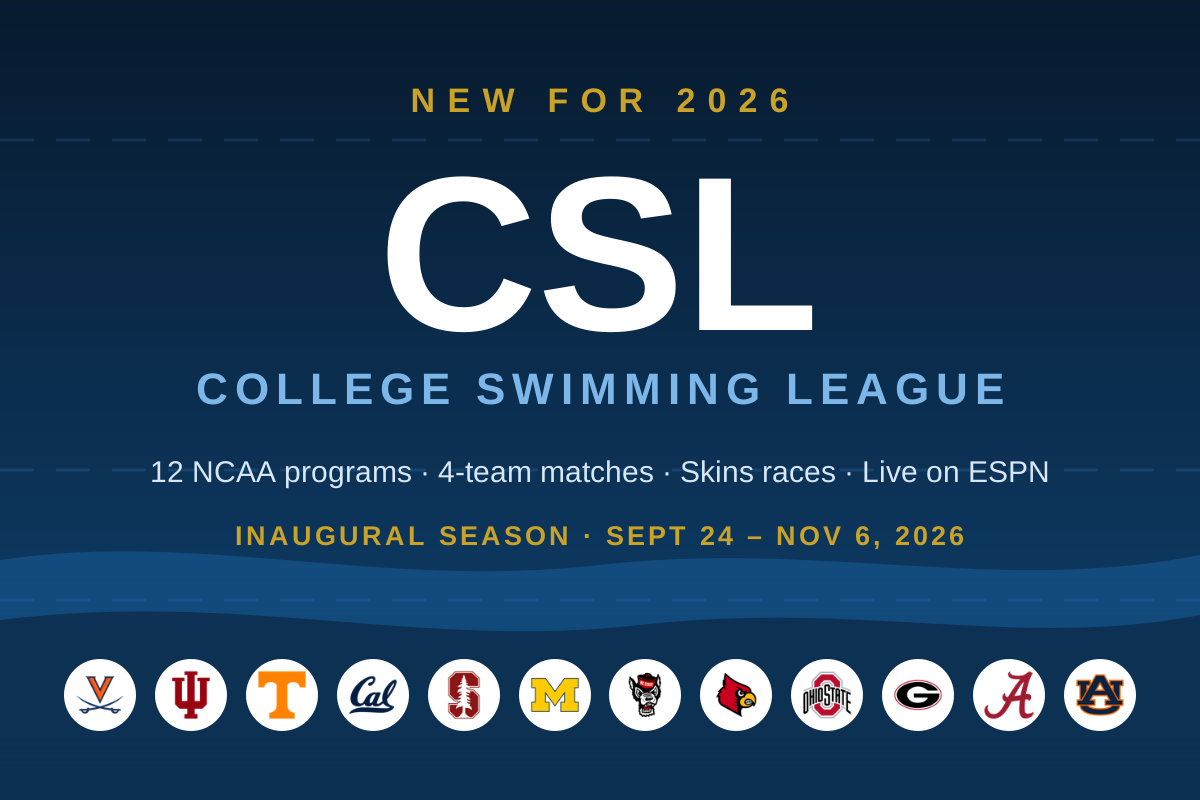
The College Swimming League (CSL) Explained
September 5th 2026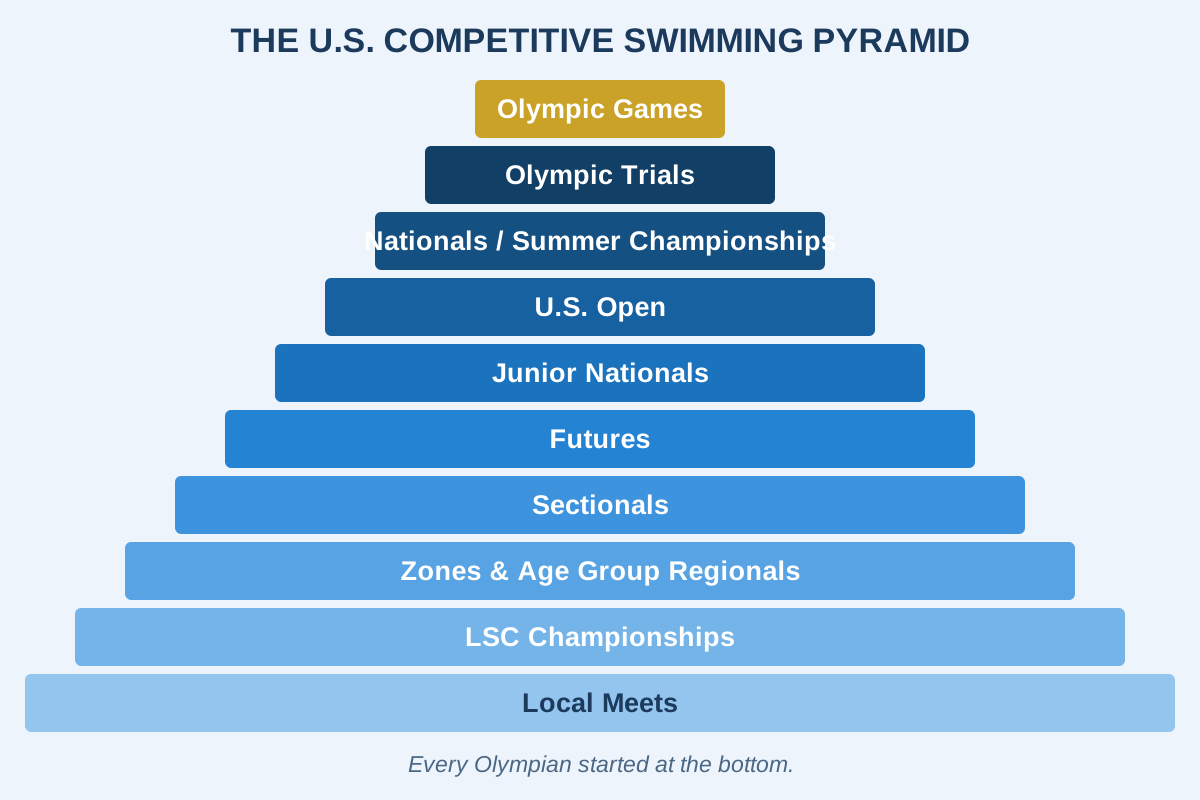
USA Swimming Championships and Time Standards Explained
August 16th 2026
Build Your Own Dryland Workout: An Exercise Menu for Swimmers
August 15th 2026
Essential Items to Pack in Your Swim Backpack for a Meet
October 2nd 2023
Swimming Time Standards: What You Need to Know
November 24th 2022
The Best Swim Gear for Optimal Performance
October 3rd 2022
The Importance of Dryland Training for Swimmers
September 28th 2022
Understand the heat sheets and what to write on the swimmer's arm for a meet
September 25th 2022